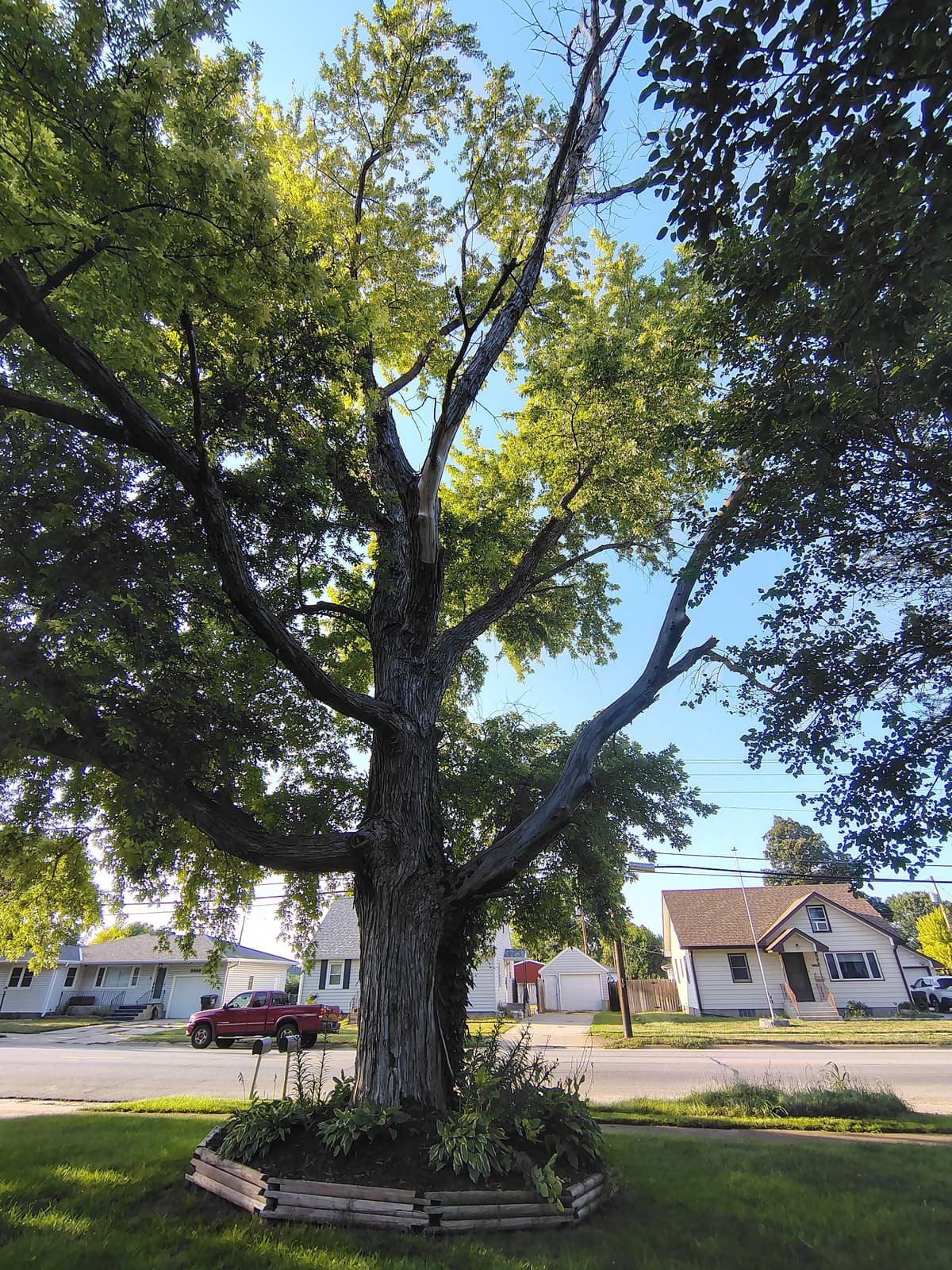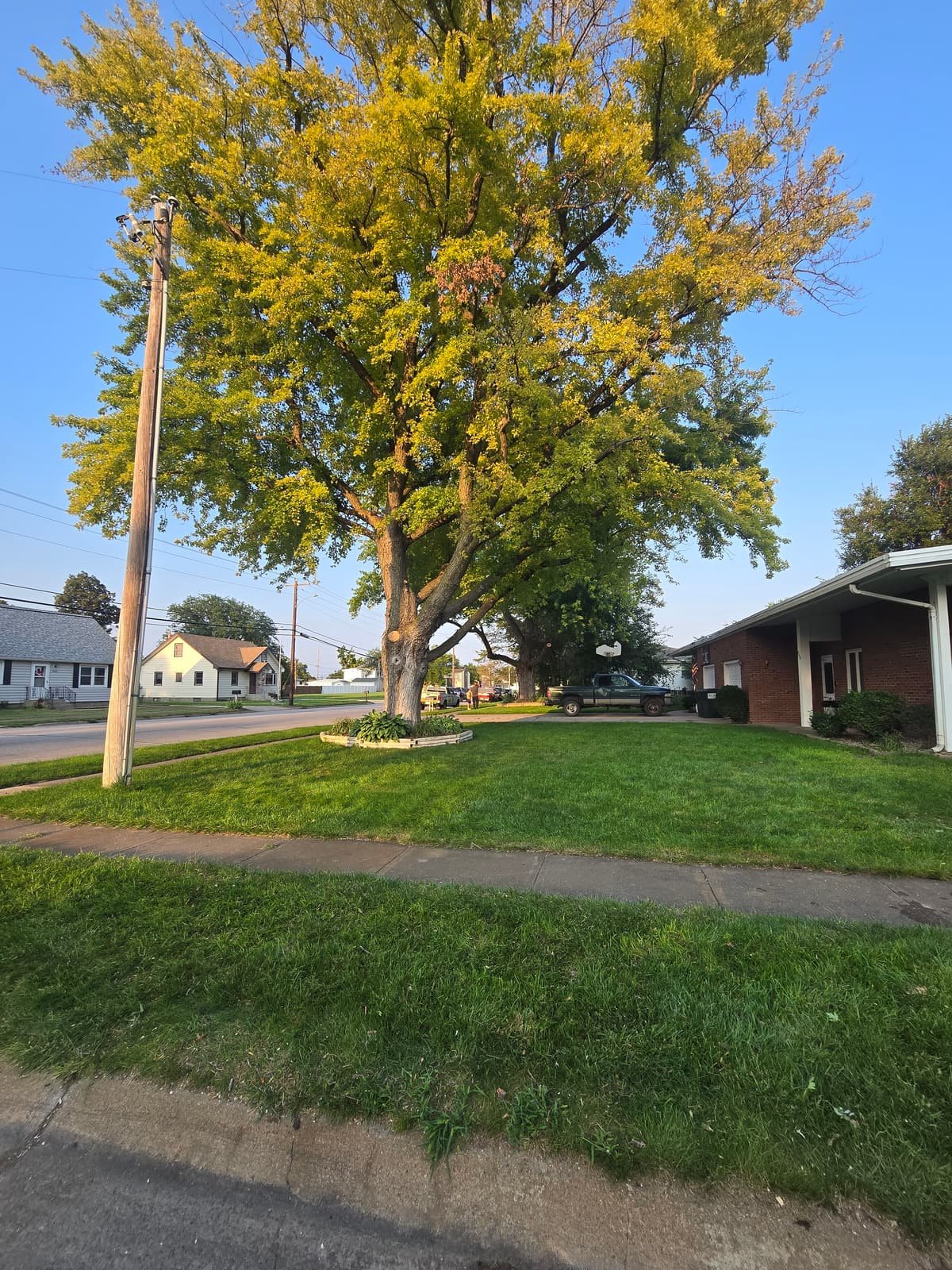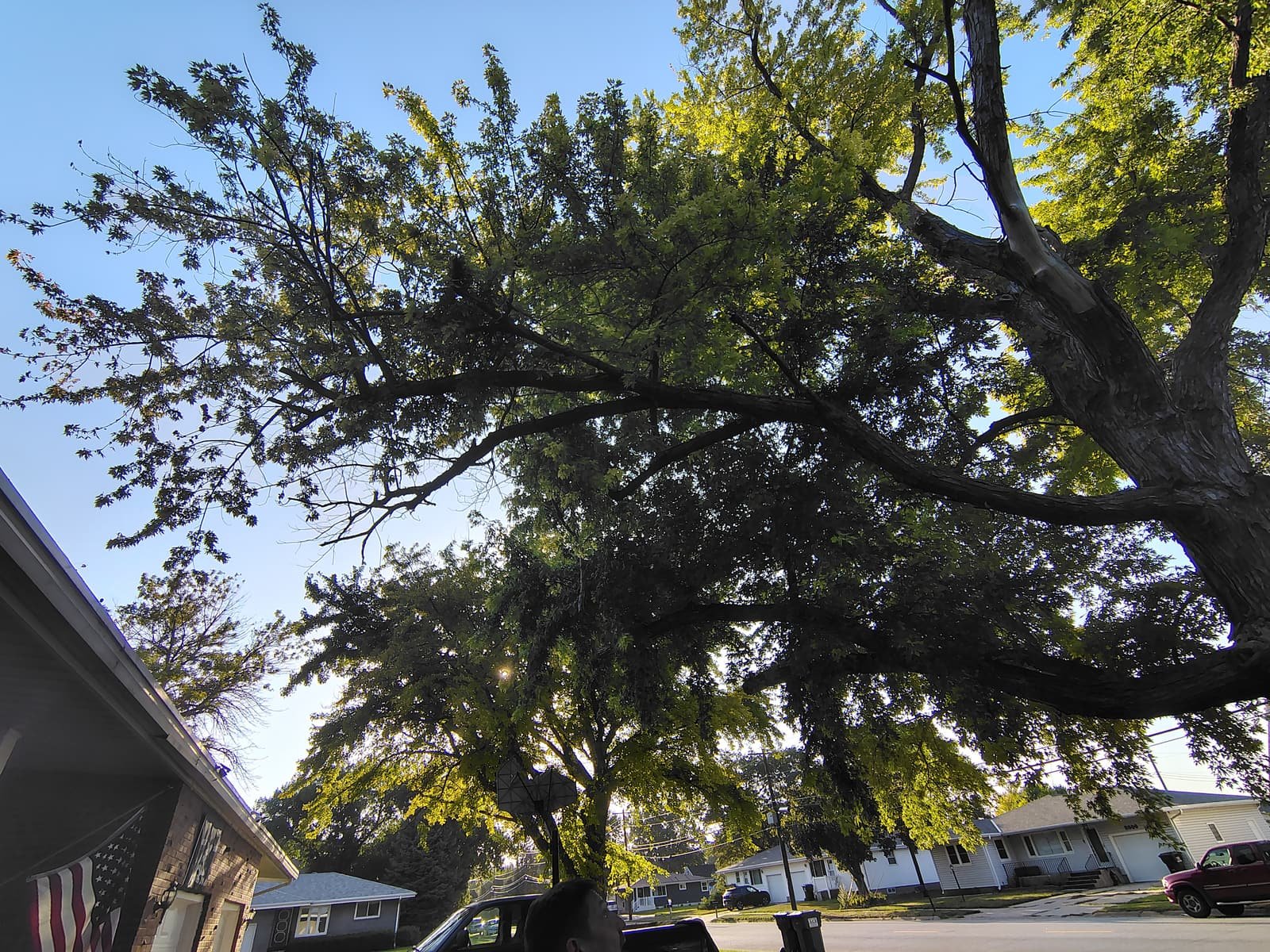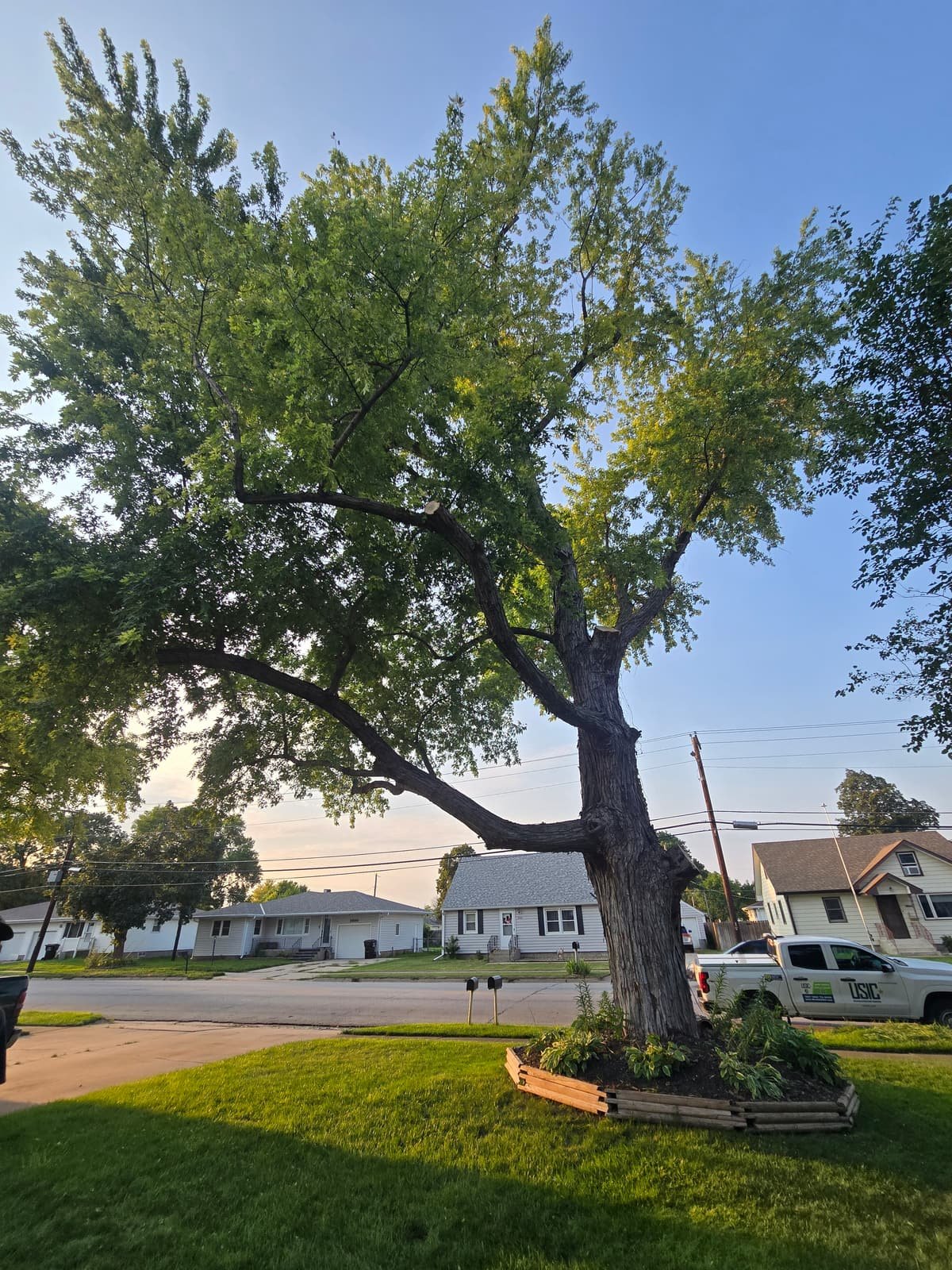
A mature tree with a weak fork or a heavy, overextended limb does not always have to be removed. Cabling and bracing add support, reduce the risk of failure, and can give a valuable shade tree many more years.
Vaughn Tree Care LLC installs cabling and bracing systems for homeowners across Columbus and the surrounding area. Every system is recommended and planned by a certified arborist.
What Is Tree Cabling?
Cabling uses high-strength steel cable installed between major limbs in the upper part of the tree, usually around two thirds of the way up from the weak point. The cable limits how far the limbs can spread apart in wind, ice, and snow, which takes stress off the weak union below.
Cables are not tight. They are installed with a little slack so the tree can still move naturally and keep building strong wood.
What Is Tree Bracing?
Bracing uses threaded steel rods installed through a split or weak union to hold it together. Rods are used lower in the tree, closer to the problem, and are often combined with cables higher up.
Together, cabling and bracing can stabilize a tree that would otherwise be at high risk of splitting apart.
Trees That Are Good Candidates
- Trees with V-shaped forks or two main trunks of similar size, called codominant stems
- Trees with a crack starting at a branch union
- Large limbs that extend over a house, driveway, or patio
- Trees that lost part of the canopy in a storm but are otherwise healthy
- Mature shade trees that would be costly or impossible to replace
When Cabling Is Not the Right Answer
Cabling supports a tree. It does not repair one. A tree with advanced decay in the trunk, major root damage, or a split that runs down into the base is usually not a good candidate, no matter how much hardware is installed.
As a certified arborist, Ted will inspect the tree and tell you honestly whether cabling, pruning, or removal is the safest choice. In many cases, the best plan is a combination of light crown reduction to take weight off the weak limbs and a cable to support them.
How Cabling Installation Works
- Inspection. We check the union, the wood, the roots, and the overall health of the tree.
- Plan. We decide where the cables or rods should go and whether the tree also needs pruning.
- Installation. Hardware is installed through the limbs, not wrapped around them. Wrapping a limb girdles it as it grows.
- Inspection schedule. Cabled trees should be checked every year or two, and after major storms, to make sure the hardware is still in good shape.
Tree Cabling FAQ
How long does tree cabling last?
A properly installed system can last many years. The tree keeps growing, so the hardware should be inspected regularly and adjusted or replaced when needed.
Does cabling hurt the tree?
The small holes drilled for the hardware are minor wounds, and the tree grows around them. They are far less harmful than the limb failure the system is designed to prevent.
Will a cabled tree still fall in a storm?
Cabling greatly reduces the risk of a weak union splitting, but no system can make a tree storm proof. Regular pruning and inspections are part of keeping a cabled tree safe.
Can a split tree be fixed?
Some splits can be stabilized with rods and cables if the wood is sound and the split does not run too far down the trunk. We will tell you honestly after looking at it.
Is cabling cheaper than removal?
Often, especially for large trees near structures. It also keeps the shade, property value, and energy savings a mature tree provides.
Related Services
- Tree pruning to reduce weight on long, heavy limbs
- Storm damage cleanup for trees that already failed
- Tree removal when a tree cannot be made safe