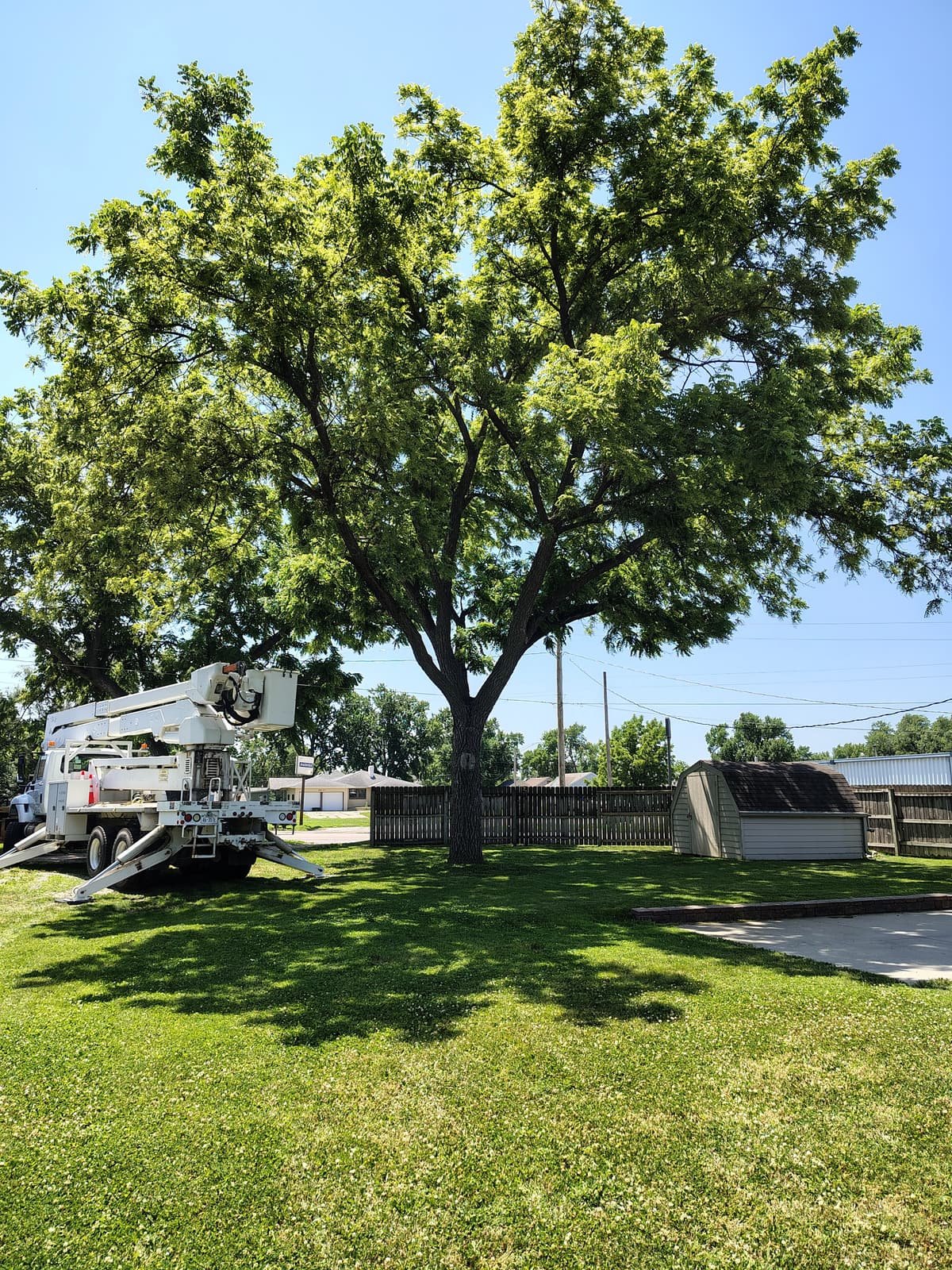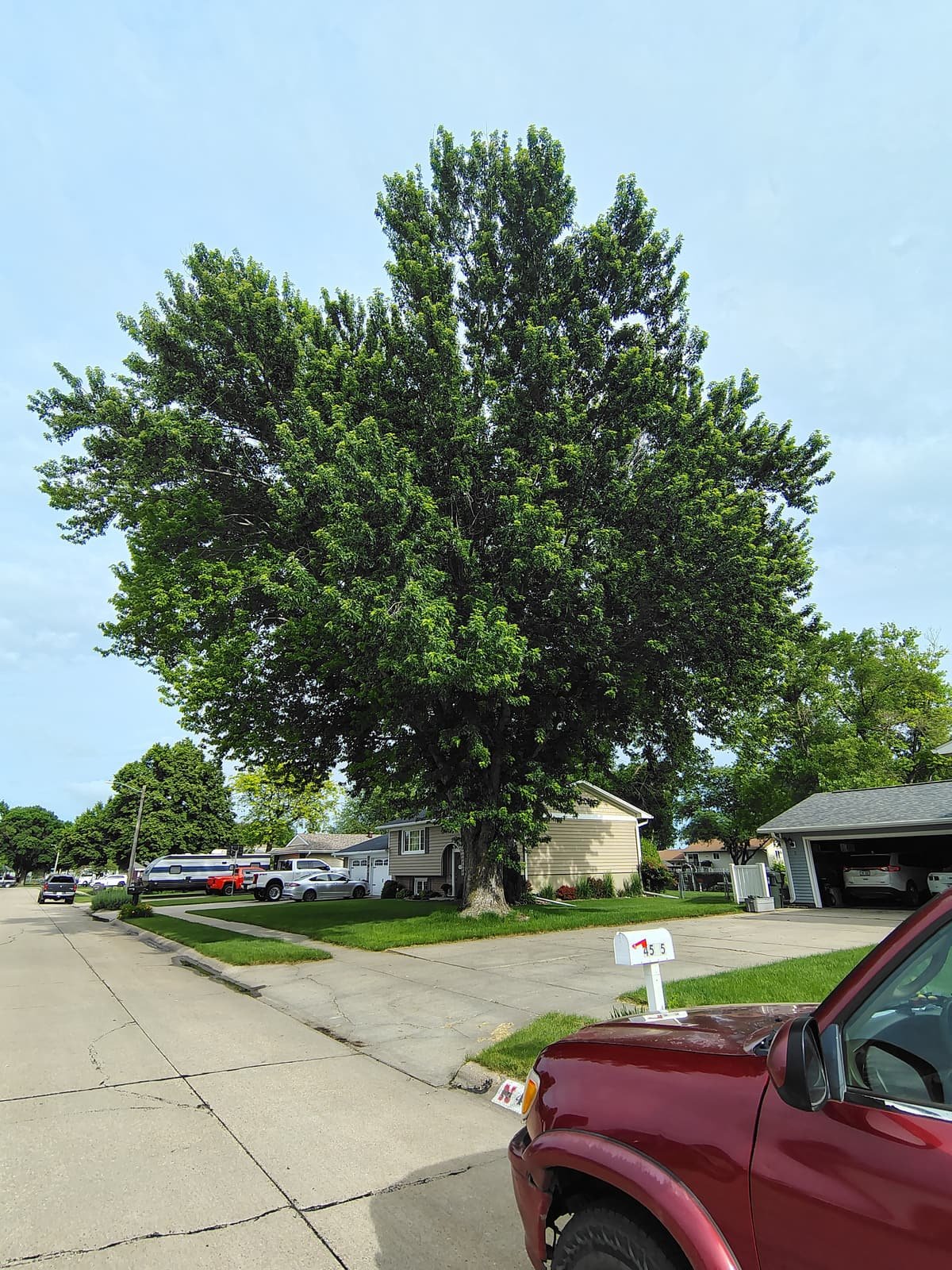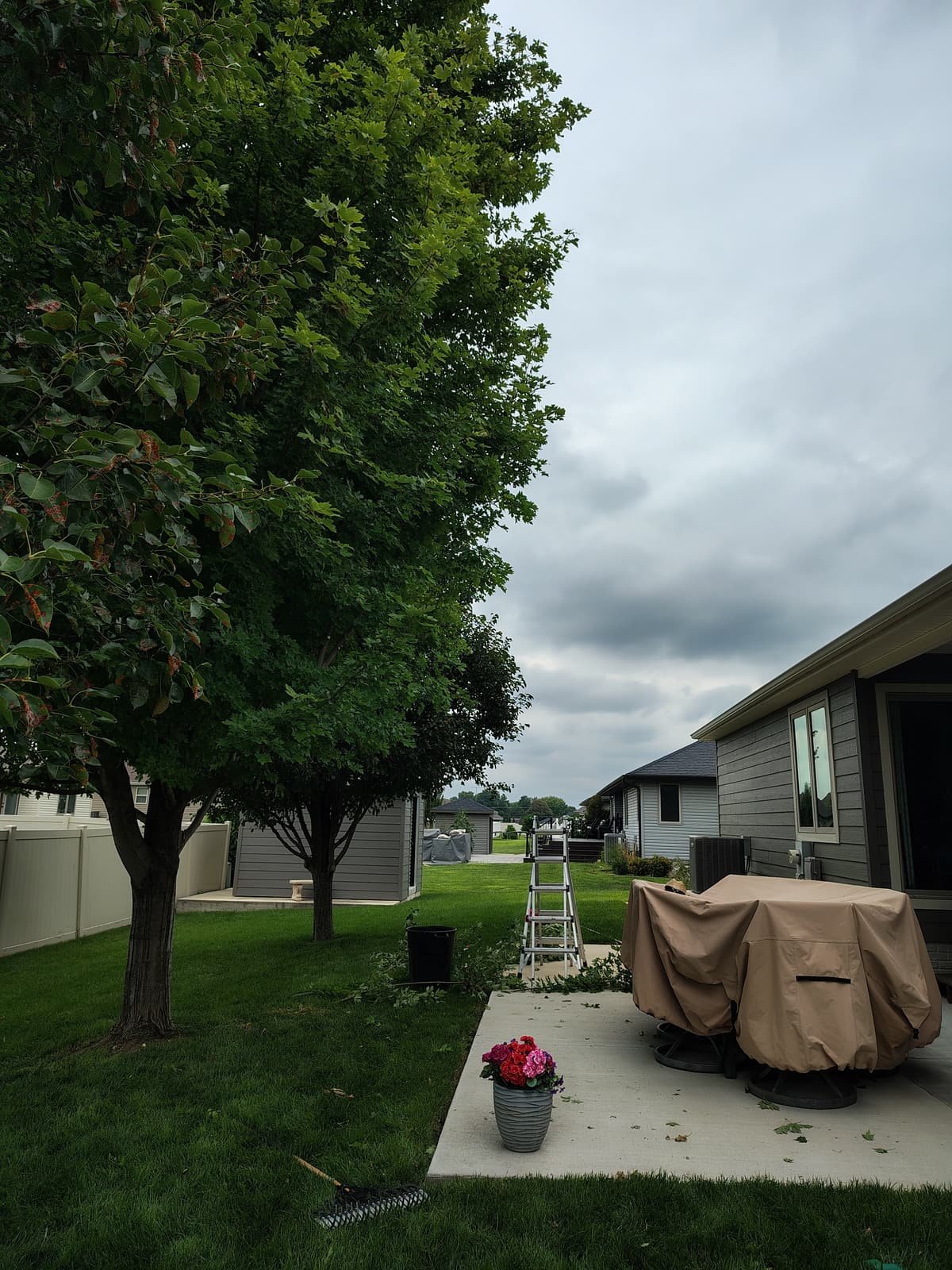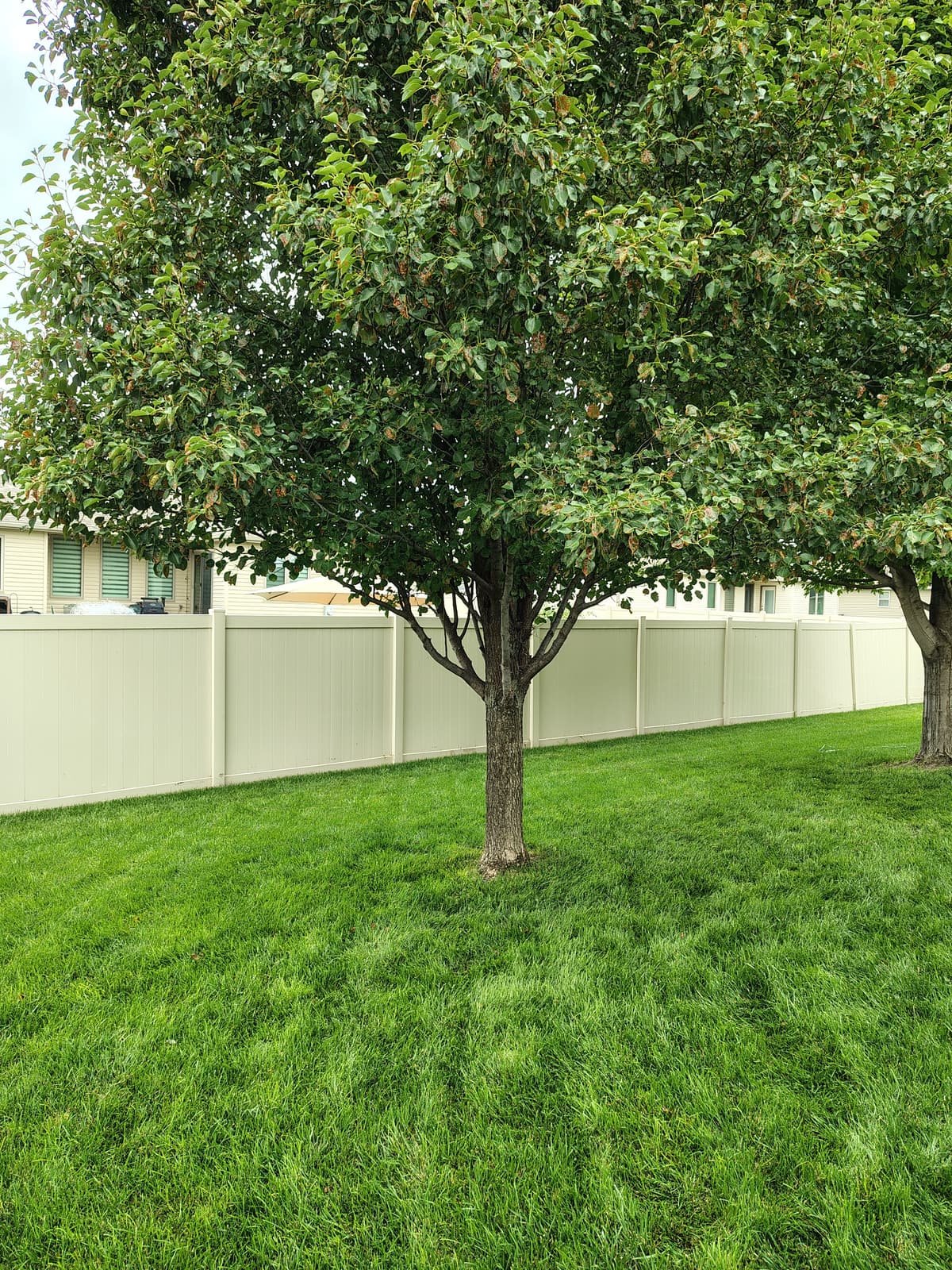
Proper pruning keeps your trees healthy, safe, and good looking for decades. Poor pruning does the opposite. It leaves wounds that rot, weak sprouts that break, and trees that need more work every year.
Vaughn Tree Care LLC prunes trees the right way across Columbus and the surrounding area. Every job is led by a certified arborist, and every cut has a reason behind it.
Why Proper Pruning Matters
Every cut on a tree is a wound. Where you cut, how much you remove, and when you do it all change how the tree responds.
A correct pruning cut is made just outside the branch collar, the slightly swollen area where a branch meets the trunk. The tree can seal over that kind of cut. A flush cut or a long stub cannot seal properly, and decay moves into the trunk.
We never top trees. Topping cuts the main limbs back to stubs. The tree answers with a flush of fast, weakly attached sprouts, and those sprouts are the ones that break off in the next storm. Topping also starves the tree, because it removes the leaves the tree needs to make food.
Our Pruning Services
- Deadwood removal. Dead and dying limbs are the ones most likely to fall. Removing them makes the tree safer to park, play, and walk under.
- Clearance pruning. We raise and shape limbs to keep them off your roof, siding, driveway, and service lines.
- Crown thinning. Selectively removing branches lets light and wind pass through the canopy, which reduces the load on heavy limbs.
- Crown reduction. Shortening long, heavy limbs back to a healthy side branch reduces weight on the ends of the tree without topping it.
- Structural pruning for young trees. A few well-placed cuts on a young tree prevent weak forks and costly problems later.
- Storm damage pruning. Torn, hanging, and split branches are cut back to clean wounds the tree can close.
- Ornamental tree pruning. Smaller trees near patios and landscape beds are shaped by hand to keep their natural form.
How Much Should You Prune?
Less than most people think. As a general rule, a healthy mature tree should not lose more than about 25 percent of its live canopy in a single year. Removing too much at once stresses the tree and triggers the same weak sprouting you see after topping.
Industry-standard pruning in the United States follows the ANSI A300 standards, which cover how and where cuts should be made. That is the approach we use. Every cut should improve the structure, health, or clearance of the tree.
When Should Trees Be Pruned in Nebraska?
Many trees can be pruned any time of year, and dead or broken limbs should be removed whenever you find them. For live-wood pruning, late fall through late winter is often the best time. The tree is dormant, the structure is easy to see without leaves, and insects and diseases are less active.
Two important exceptions in Nebraska:
- Oaks. Avoid pruning oaks from spring through midsummer. Fresh wounds attract the beetles that spread oak wilt.
- Elms. Pruning elms during the growing season can attract the beetles that carry Dutch elm disease. Dormant season pruning is safer.
Maples, birches, and walnuts may drip sap if pruned in late winter. It looks alarming, but it does not harm the tree.
Signs Your Tree Needs Pruning
- Dead or hanging branches in the canopy
- Limbs rubbing the roof, gutters, or siding
- Branches blocking a streetlight, sidewalk, or driveway
- Two main stems forming a tight V-shaped fork
- A canopy so dense that grass will not grow underneath
- Branches crossing and rubbing against each other
- It has been more than three to five years since the tree was last pruned
Tree Pruning FAQ
How often should trees be pruned?
Most mature shade trees benefit from pruning every three to five years. Young trees do best with light structural pruning every year or two while they are developing.
What is the difference between tree trimming and tree pruning?
Most people use the words to mean the same thing. Pruning usually refers to careful, selective cuts for the health and structure of the tree, which is how we approach every trimming job.
Is tree topping ever a good idea?
No. Topping leaves large wounds that decay and forces weak sprouts that break easily. If a tree is too big for its space, crown reduction or removal are better options.
Can you prune trees near power lines?
We prune around the service lines that run from the pole to your house. Trees growing into main distribution lines have to be handled by your electric utility or a line-clearance crew. We will tell you which situation you have.
Will pruning hurt my tree?
Correct pruning does not hurt a healthy tree. It removes weak, dead, and problem branches and helps the tree put its energy into strong growth. Over-pruning and bad cuts are what cause harm.
Do I need to paint or seal pruning cuts?
No. Research has shown that wound paints do not prevent decay and can trap moisture. A clean cut in the right spot is the best thing you can do for the tree.
Related Services
- Tree cabling and bracing for weak forks and heavy limbs
- Trunk and soil injections for insect and disease problems
- Tree removal when a tree cannot be saved
- Storm damage cleanup after high winds and ice