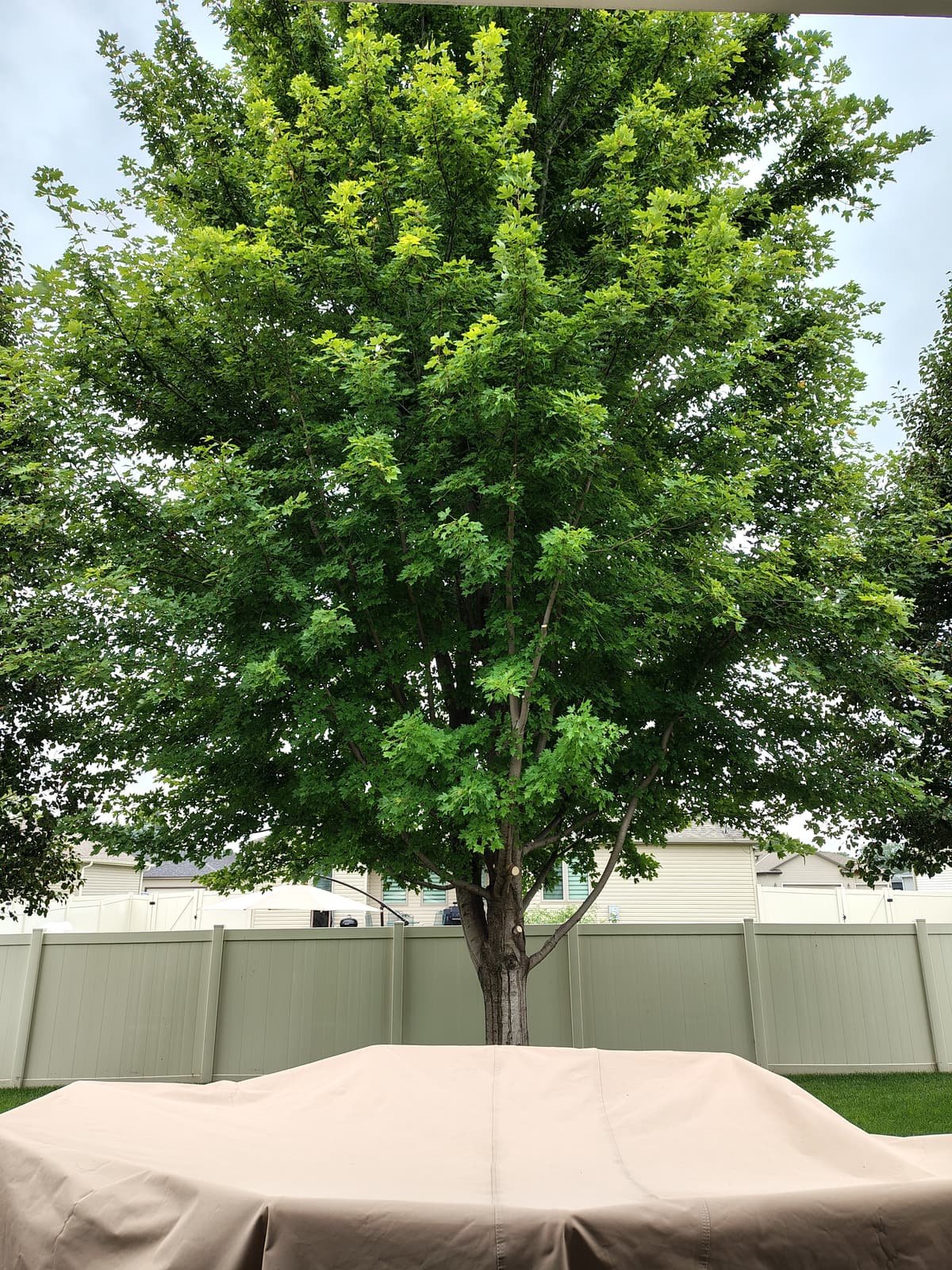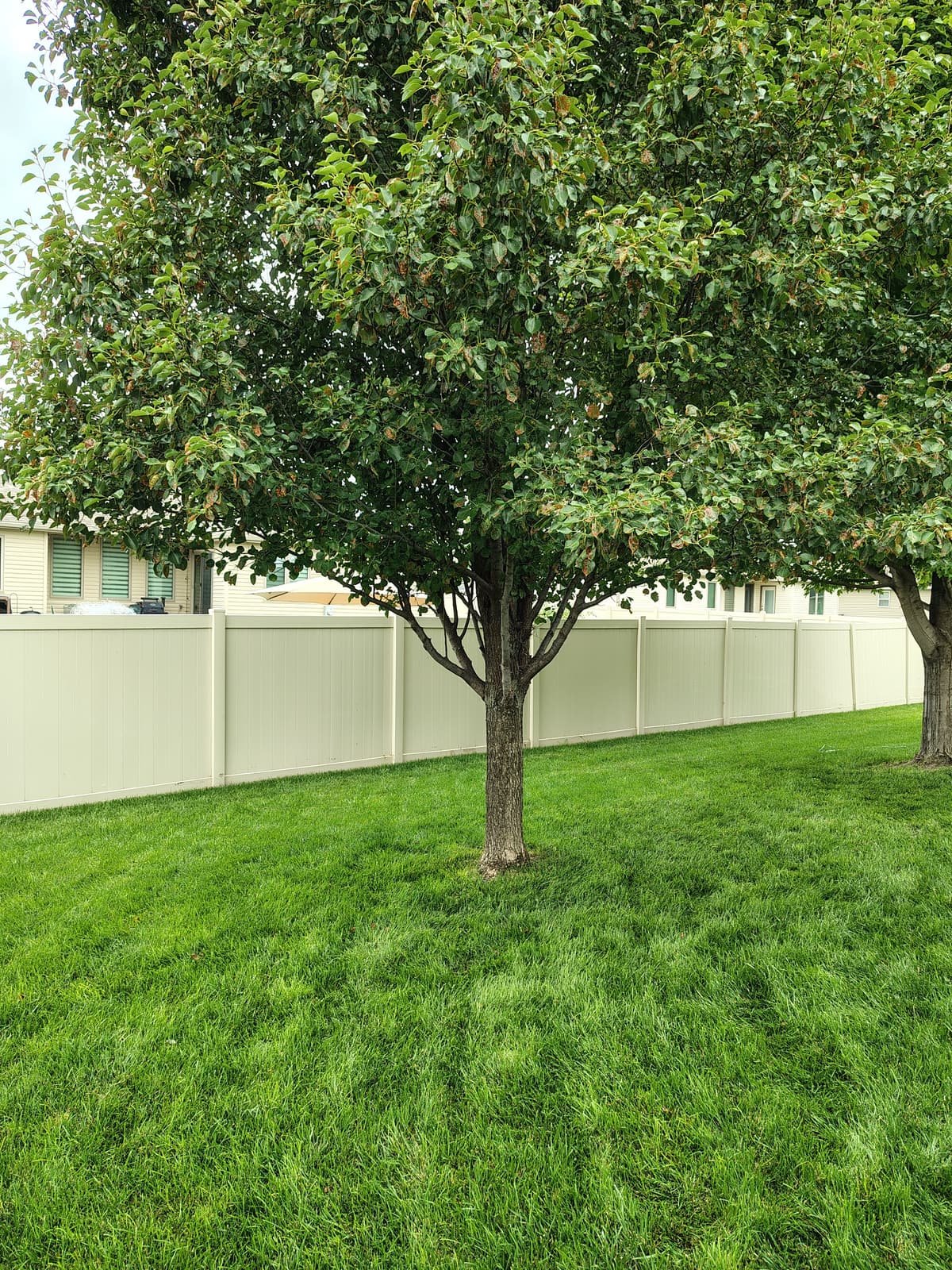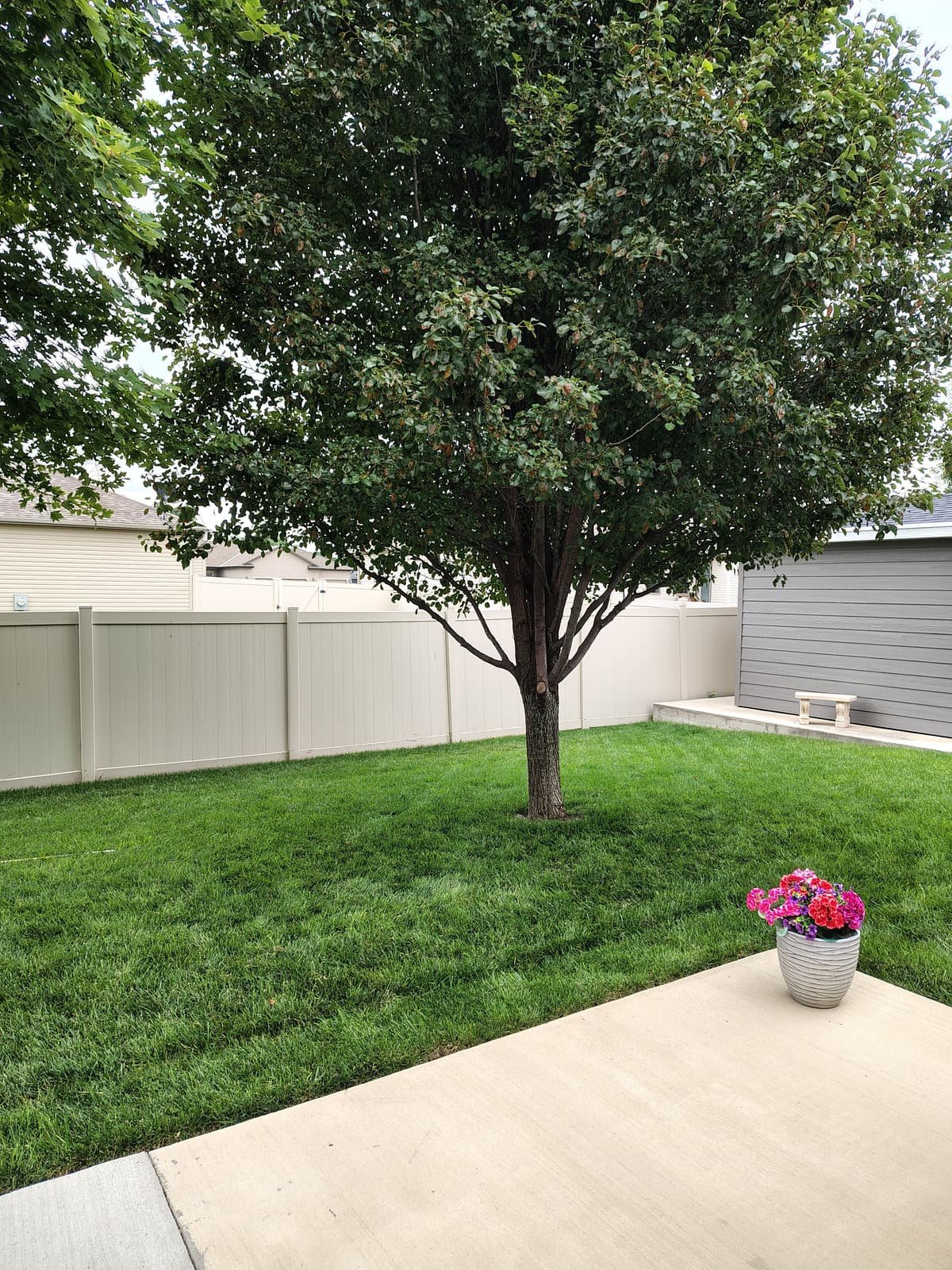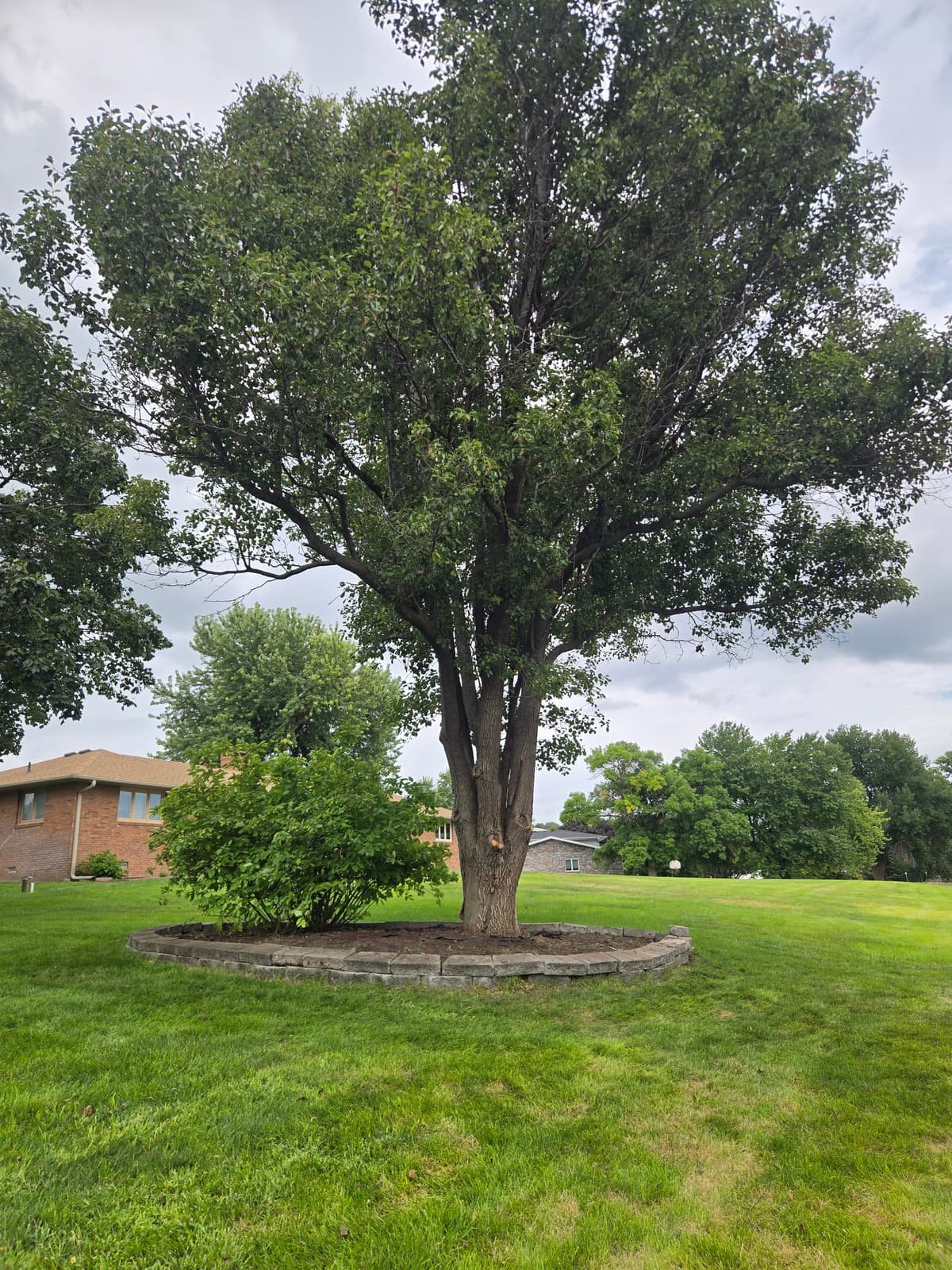
A tree planted correctly in the right spot can thrive for generations. A tree planted too deep, or in the wrong place, struggles from day one. Vaughn Tree Care LLC helps you choose the right tree and plants it the right way.
Whether you are replacing a tree you lost, adding shade to a new yard, or planting a windbreak on an acreage, a little planning now saves you years of problems later.
Right Tree, Right Place
Before choosing a species, we look at:
- Mature size. That 6 foot sapling might be 60 feet tall and 50 feet wide someday. It needs room to get there without hitting the house or the power lines.
- Soil. Many soils in our area are alkaline, which causes yellow leaves on trees like pin oak and river birch. We steer you toward trees that handle it.
- Sun and wind. Nebraska wind is hard on young trees. Some species handle it far better than others.
- Your goals. Shade, privacy, fall color, a windbreak, or wildlife habitat all point to different trees.
Trees That Do Well in Central and Eastern Nebraska
Some reliable choices for our area include bur oak, swamp white oak, hackberry, Kentucky coffeetree, American linden, thornless honeylocust, and disease-resistant elm varieties. For evergreens, Black Hills spruce, Norway spruce, and Ponderosa pine are common choices, and eastern redcedar works well in windbreaks.
Diversity matters. Neighborhoods that planted mostly ash trees are now losing them to emerald ash borer, just as elm-lined streets were lost to Dutch elm disease. Mixing species protects your yard from the next pest.
Trees we usually recommend avoiding in new plantings include ash, Siberian elm, silver maple near houses, and Bradford pear. They either face serious pest problems or break apart easily in storms.
Planted the Right Way
- Correct depth. The root flare, where the trunk widens at the base, should sit at or slightly above the soil line. Planting too deep is the most common reason young trees fail.
- Wide hole. The hole should be two to three times wider than the root ball but no deeper.
- Root correction. Circling roots from the nursery pot are cut or straightened before planting.
- Proper mulch. A ring of wood chip mulch two to three inches deep, pulled back from the trunk. Never piled against the bark like a volcano.
- Staking only when needed. Most trees do not need stakes. When they do, stakes come off after the first year.
- Watering plan. You get clear instructions for the first two growing seasons.
When to Plant Trees in Nebraska
Spring and fall are the best times. Spring planting gives roots a full season to grow before winter. Fall planting, from late August through October, takes advantage of warm soil and cool air, which is easy on the tree.
Summer planting can work with container trees and consistent watering, but hot, windy stretches make it harder.
Caring for a Newly Planted Tree
Water is the number one need. In dry weather, give a new tree a slow, deep soaking about once a week during its first two growing seasons. A garden hose trickling at the base for 20 to 30 minutes works well. Check the soil a few inches down. It should feel moist, not soggy.
Keep the mulch ring in place, keep mowers and string trimmers away from the trunk, and avoid fertilizing at planting time. The tree needs roots first.
Tree Planting FAQ
What is the fastest growing shade tree for Nebraska?
Fast growers like silver maple and cottonwood grow quickly but tend to be weak and break in storms. Trees like hackberry, swamp white oak, and some elm varieties give you a good balance of reasonable growth and strong wood.
How far from the house should I plant a tree?
It depends on the mature size. As a general rule, large shade trees should be at least 20 feet from the house, and small ornamental trees at least 10 feet.
What should I plant to replace my ash tree?
Good replacements include bur oak, swamp white oak, hackberry, Kentucky coffeetree, and American linden. We will help you pick one that fits your space and soil.
Can I plant a tree where a stump was ground?
It is best to plant a few feet away from the old stump. The remaining roots take years to break down, and the new tree will establish faster in fresh soil.
How much should I water a new tree?
In dry weather, a slow, deep soaking about once a week for the first two growing seasons. More often during hot, windy spells. Less if you are getting regular rain.
Related Services
- Stump grinding to clear the spot for a new tree
- Tree pruning for structural pruning as young trees grow
- Trunk and soil injections for yellowing and stressed trees