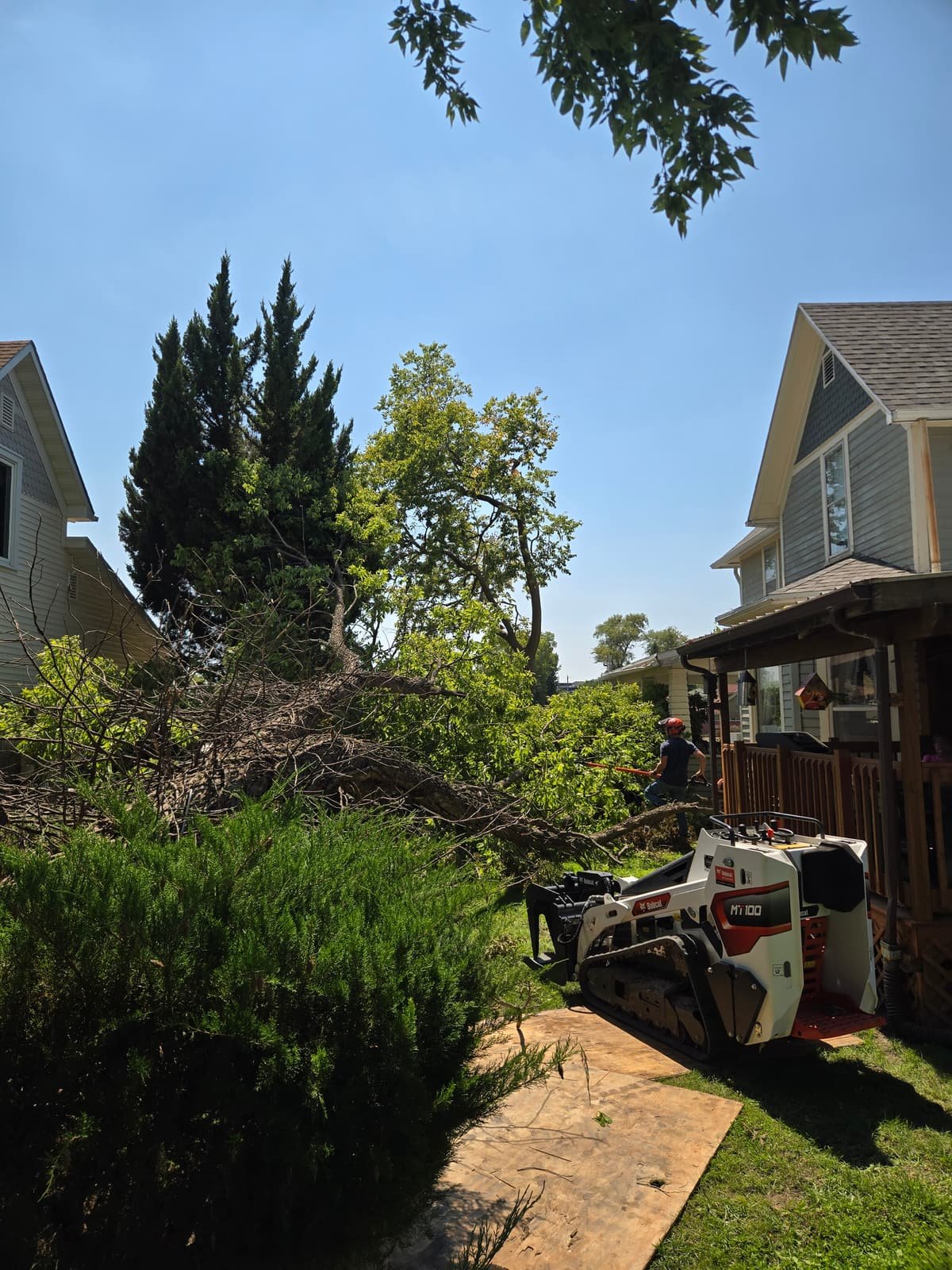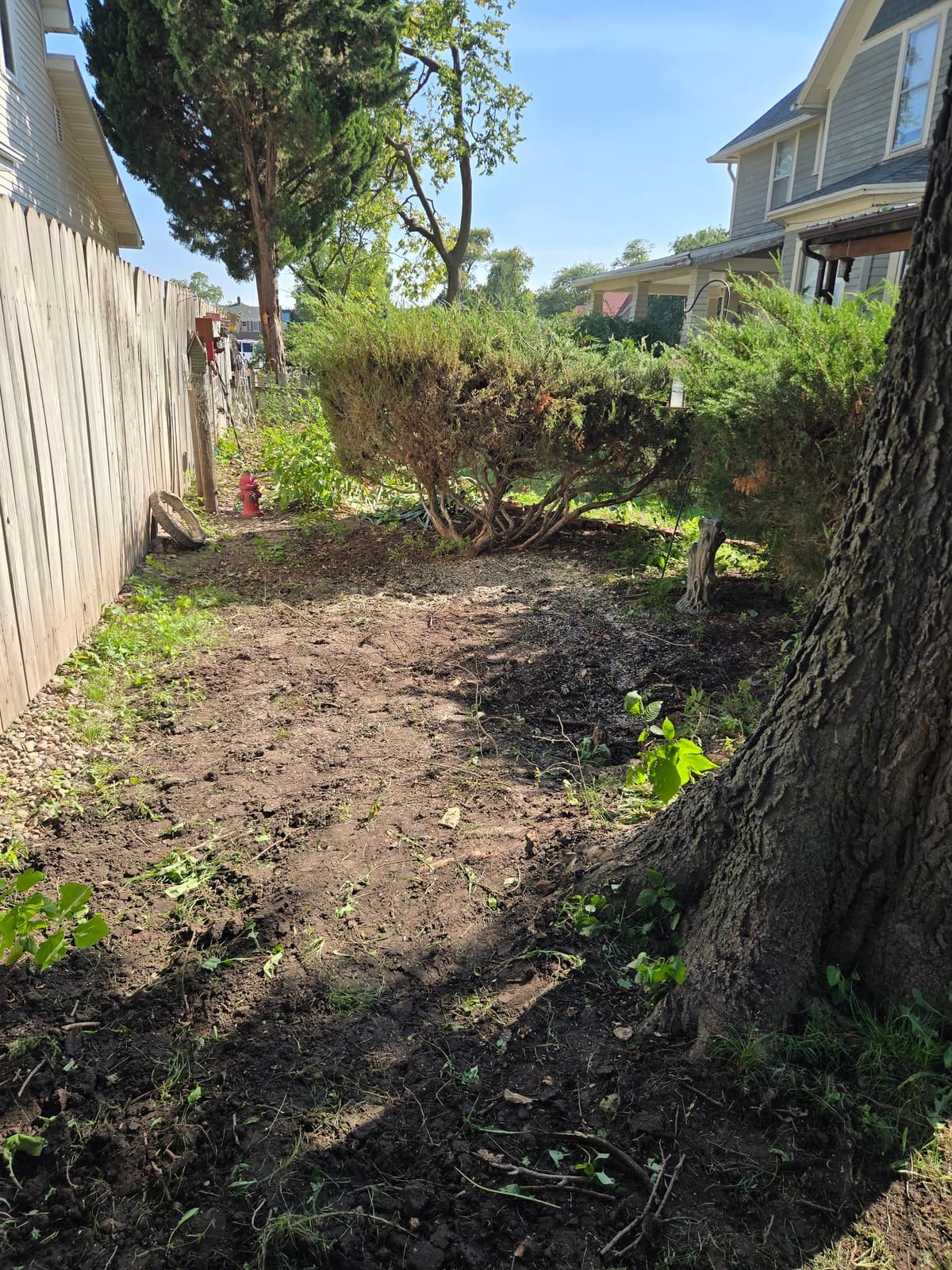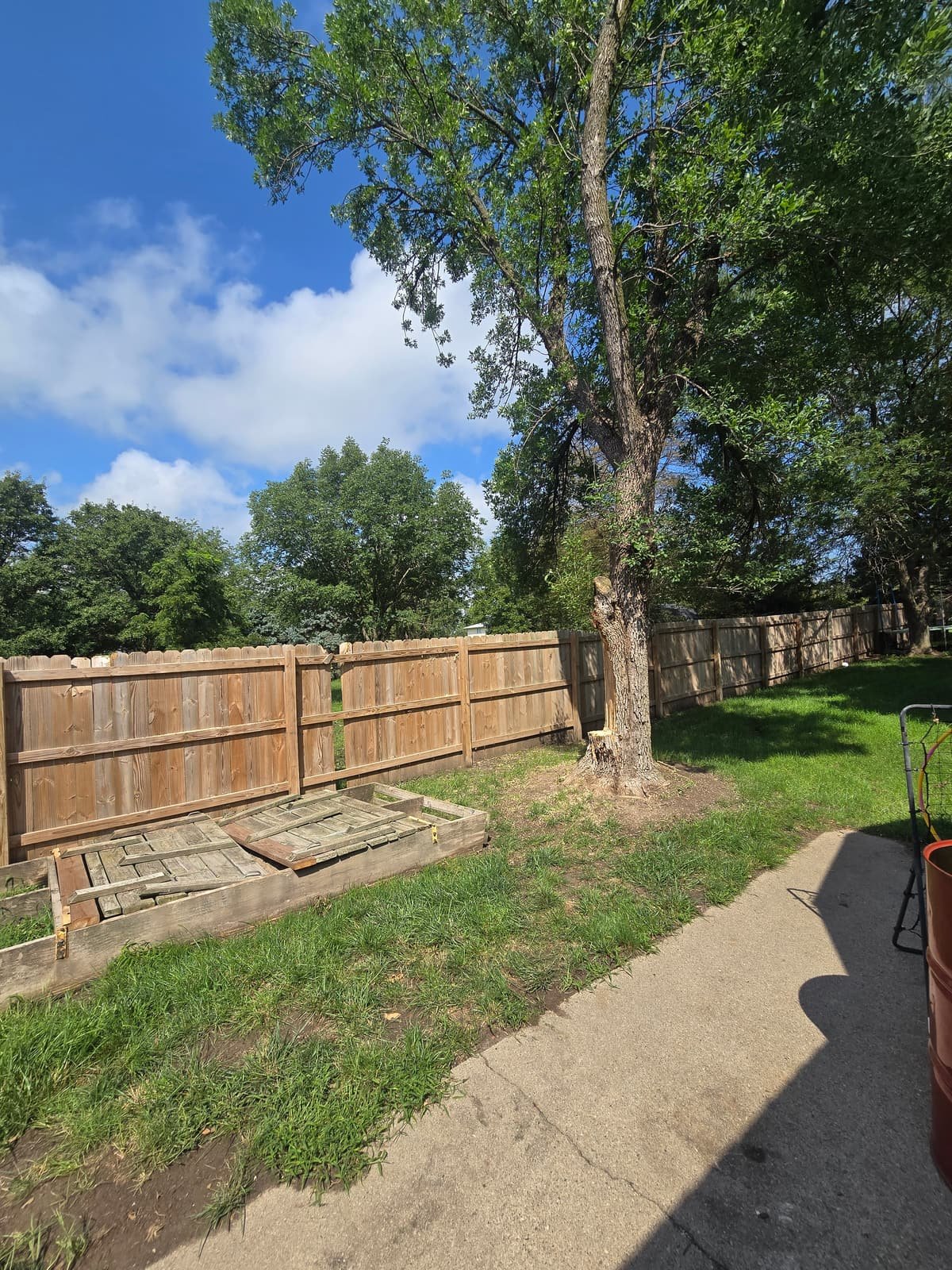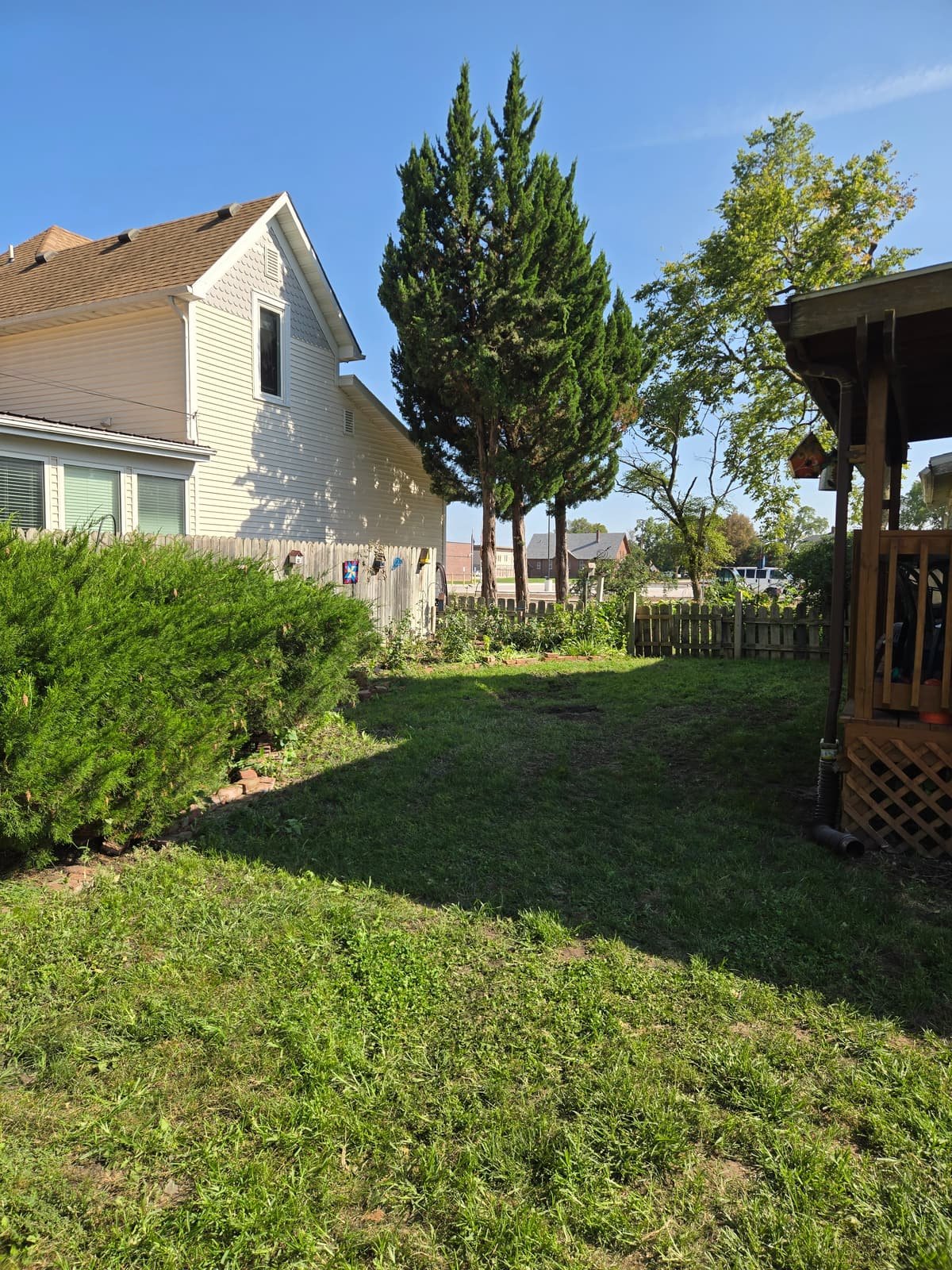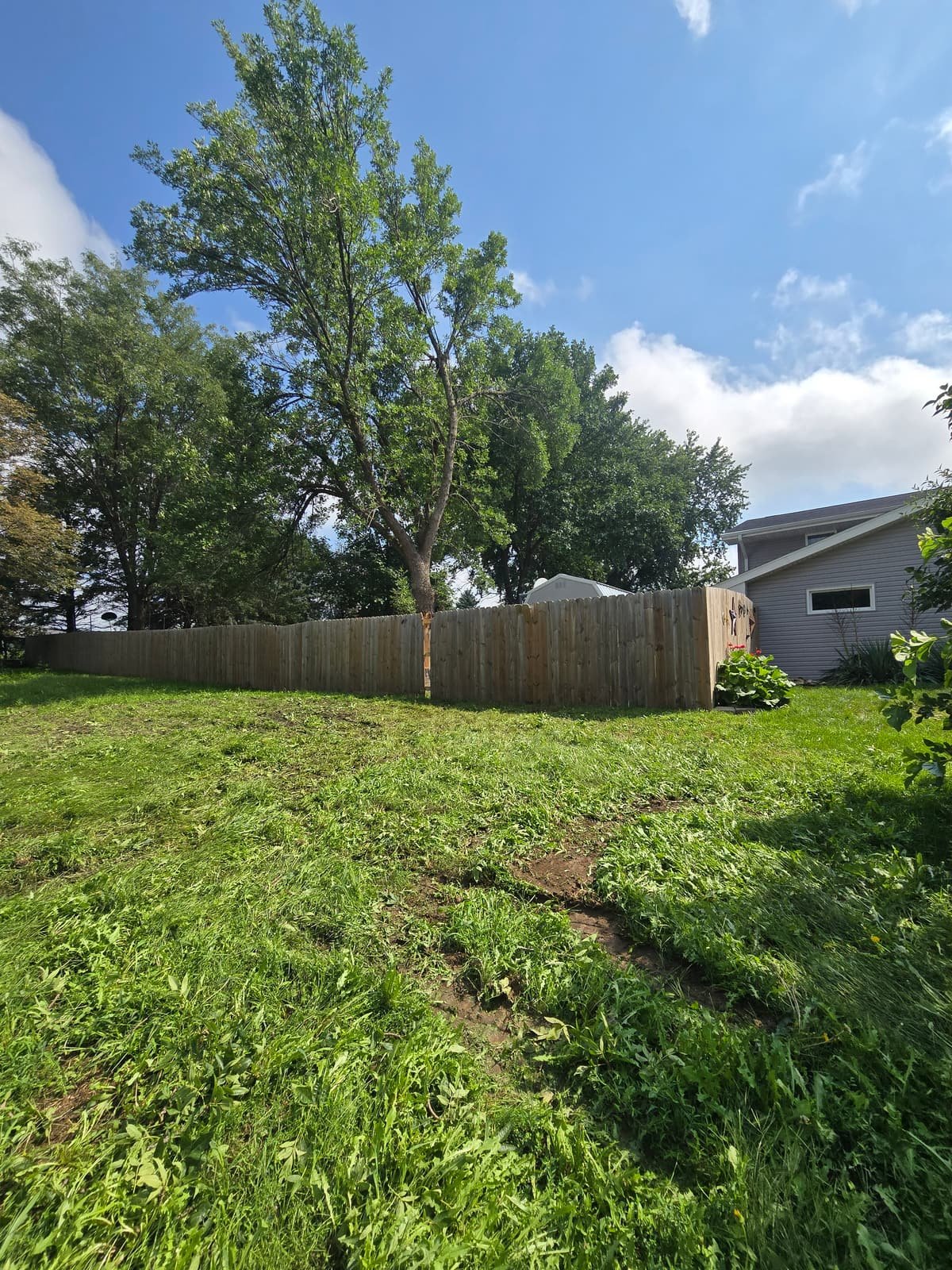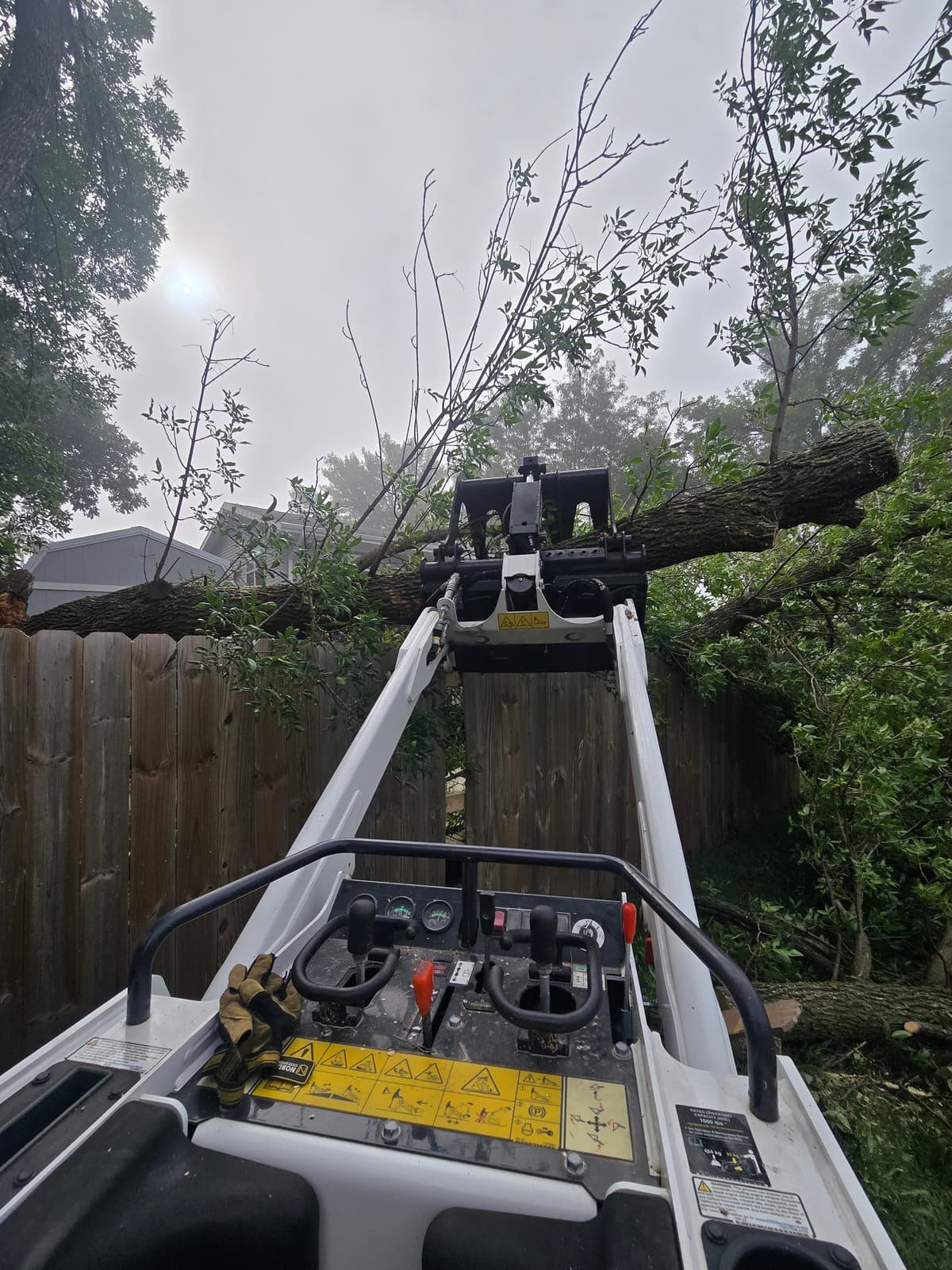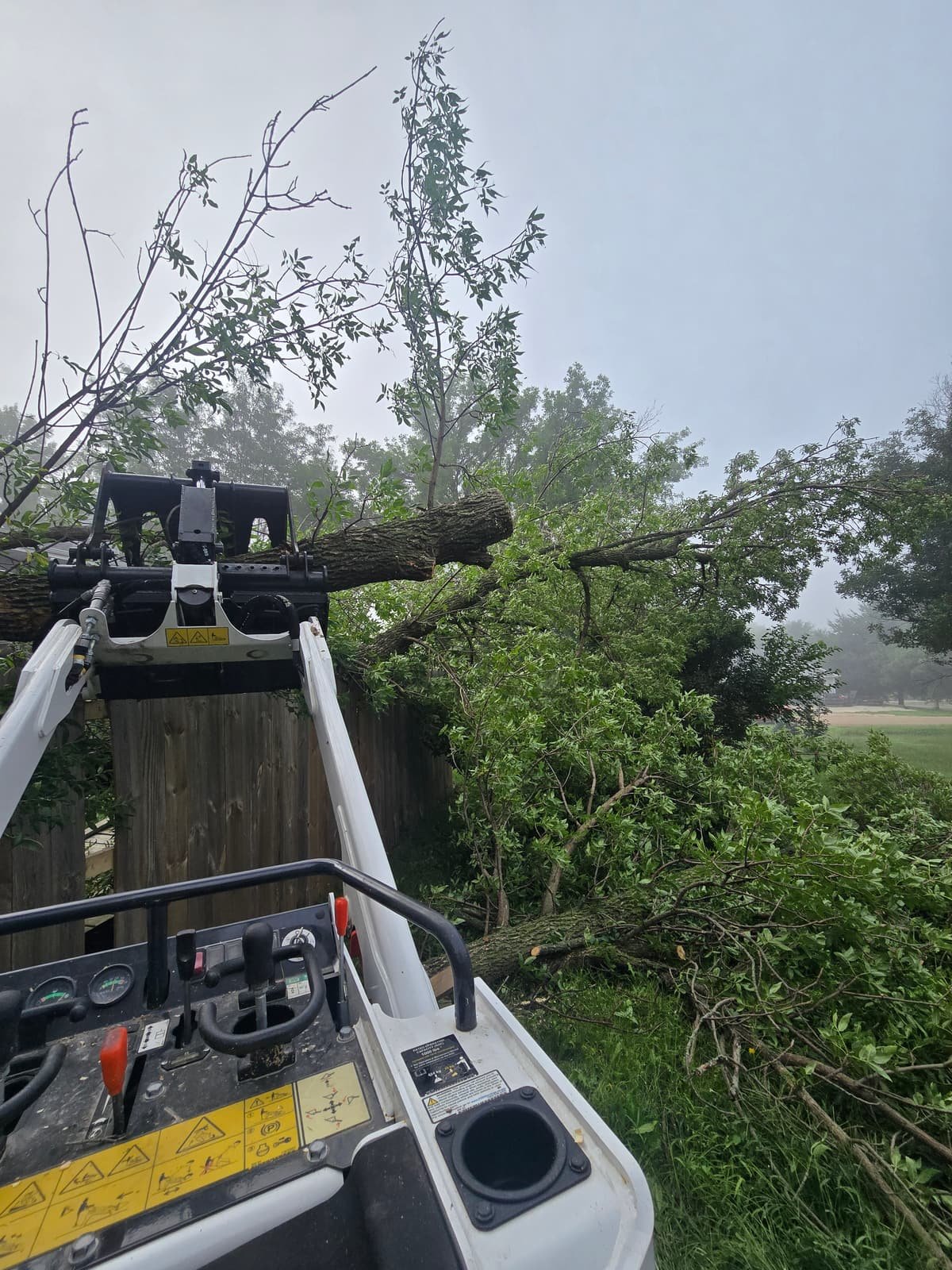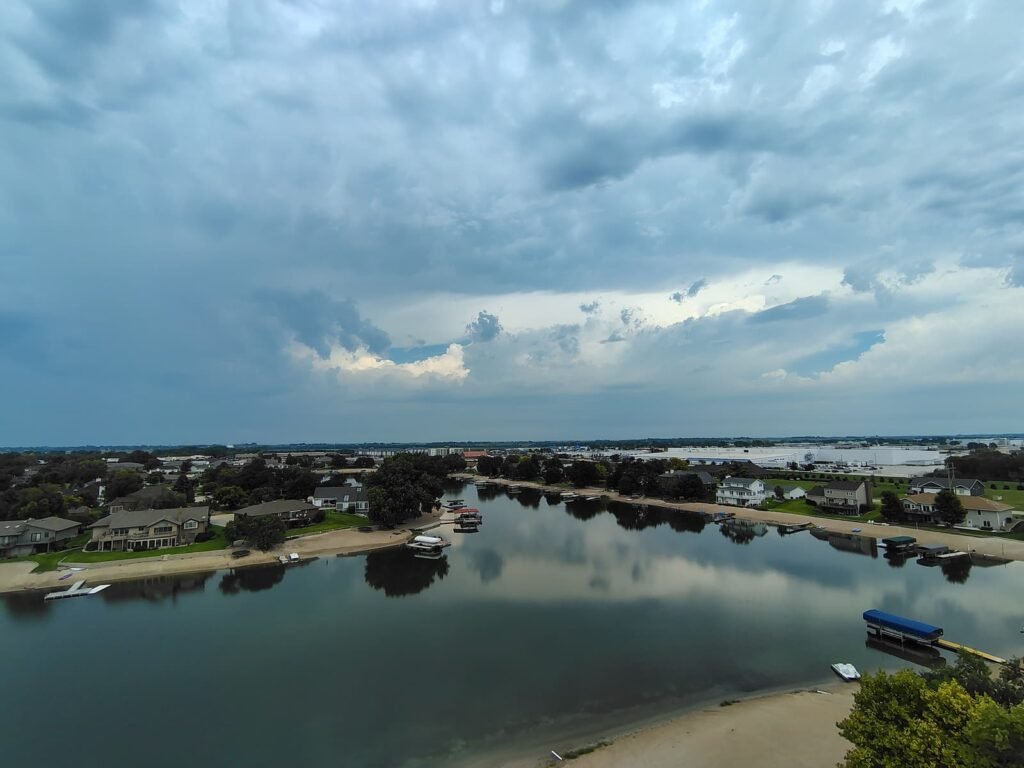
Nebraska storms can bring down limbs and entire trees in minutes. Straight-line winds, heavy spring snow, and ice all put enormous weight on trees. When a tree is split, uprooted, or lying across your fence, yard, or driveway, Vaughn Tree Care LLC can remove it safely and clean up the mess.
We serve Columbus and the surrounding area, including all of Platte, Colfax, Butler, Merrick, and Polk counties.
What to Do After a Storm Damages a Tree
- Stay clear. Do not walk under hanging limbs or near a tree that is cracked or leaning.
- Look for power lines. If a tree or limb is touching a power line, assume the line is live. Keep everyone back and call your electric utility right away.
- Take photos. Photograph the damage from several angles before anything is moved. Your insurance company will want them.
- Call your insurance company. Many homeowners policies help cover tree removal when a tree damages a covered structure, like your house, garage, or fence. Coverage varies, so check your policy.
- Call us. We will assess the tree, give you a clear price, and remove it safely.
Storm-Damaged Trees Are Dangerous
Fallen and broken trees are under tension in ways that are hard to see. A bent limb can spring back when it is cut. A trunk resting on another branch can roll. An uprooted tree can snap back toward its root plate.
Please do not try to handle a large storm-damaged tree with a chainsaw yourself. Every year, people are seriously injured doing storm cleanup. We have the training, the rigging, and the equipment, including a bucket truck and a mini skid steer with a grapple, to take damaged trees apart safely.
Storm Damage We Handle
- Uprooted and fallen trees
- Split trunks and broken tops
- Hanging and broken limbs, sometimes called widowmakers
- Trees and limbs on fences, sheds, garages, and houses
- Root balls and stumps left after a tree tips over
- Complete brush and debris cleanup
Can a Storm-Damaged Tree Be Saved?
Sometimes. A tree that lost a few limbs but kept a sound trunk and most of its canopy can often recover with corrective pruning. A tree with a split trunk or major root damage usually cannot.
As a certified arborist, Ted will look at the damage and tell you honestly whether corrective pruning or cabling can save the tree, or whether removal is the safe choice. Signs a tree is not safe to keep:
- The trunk is split or cracked down the middle
- More than half of the canopy is gone
- The root plate lifted out of the ground
- The tree is leaning more than it did before the storm
- The main leader or top is snapped off on a large tree
Preventing Storm Damage
The best time to deal with storm damage is before the storm. Regular pruning removes dead limbs and reduces weight on long, heavy branches. Weak V-shaped forks can be supported with cabling. Trees with serious defects near your house can be removed on your schedule instead of in an emergency.
Silver maples, Siberian elms, cottonwoods, and Bradford pears are especially prone to storm breakage in our area. If you have one of these near your house, it is worth having it looked at.
Storm Damage Cleanup FAQ
Does homeowners insurance cover tree removal after a storm?
Often, if the tree damaged a covered structure like your house, garage, or fence. Trees that fall in the yard without hitting anything are usually not covered. Check with your insurance agent, and take photos before any cleanup starts.
A tree from my yard fell on my neighbor's property. Who is responsible?
In many cases, the owner of the property where the tree lands handles the claim with their own insurance, unless the tree was obviously dead or neglected before the storm. Talk to your insurance company about your situation.
Can you remove a tree that is on a power line?
The electric utility has to make the line safe first. Once they have cleared or shut off the line, we can remove the tree.
How soon can you get out after a storm?
Call or text (308) 331-0367 as soon as it is safe. After big storms we prioritize trees that are on homes or blocking access, then work through the rest as quickly as we can.
Should I remove a tree that is leaning after a storm?
A tree that suddenly leans after a storm, especially with soil heaved up on one side, is a serious hazard. Stay clear of it and have it looked at right away.
Related Services
- Tree removal for trees that cannot be saved
- Stump grinding for root balls and stumps after cleanup
- Tree cabling to support damaged trees worth keeping
- Tree pruning to reduce future storm risk